Introduction
To understand the landscape of Slavonia is to understand the slow, deliberate work of centuries of viticulture. This is a region where the horizons are defined by the soft, undulating crests of ancient hillsides, and the soil itself tells a story of prehistoric seas and long-forgotten empires. Long before modern political borders mapped out this corner of Continental Europe, Roman legionnaires recognized the exceptional properties of these valleys, naming the area around Kutjevo Vallis Aurea—the Golden Valley. They were not referring to gold mined from the earth, but to the liquid amber yielded by its south-facing slopes each autumn.
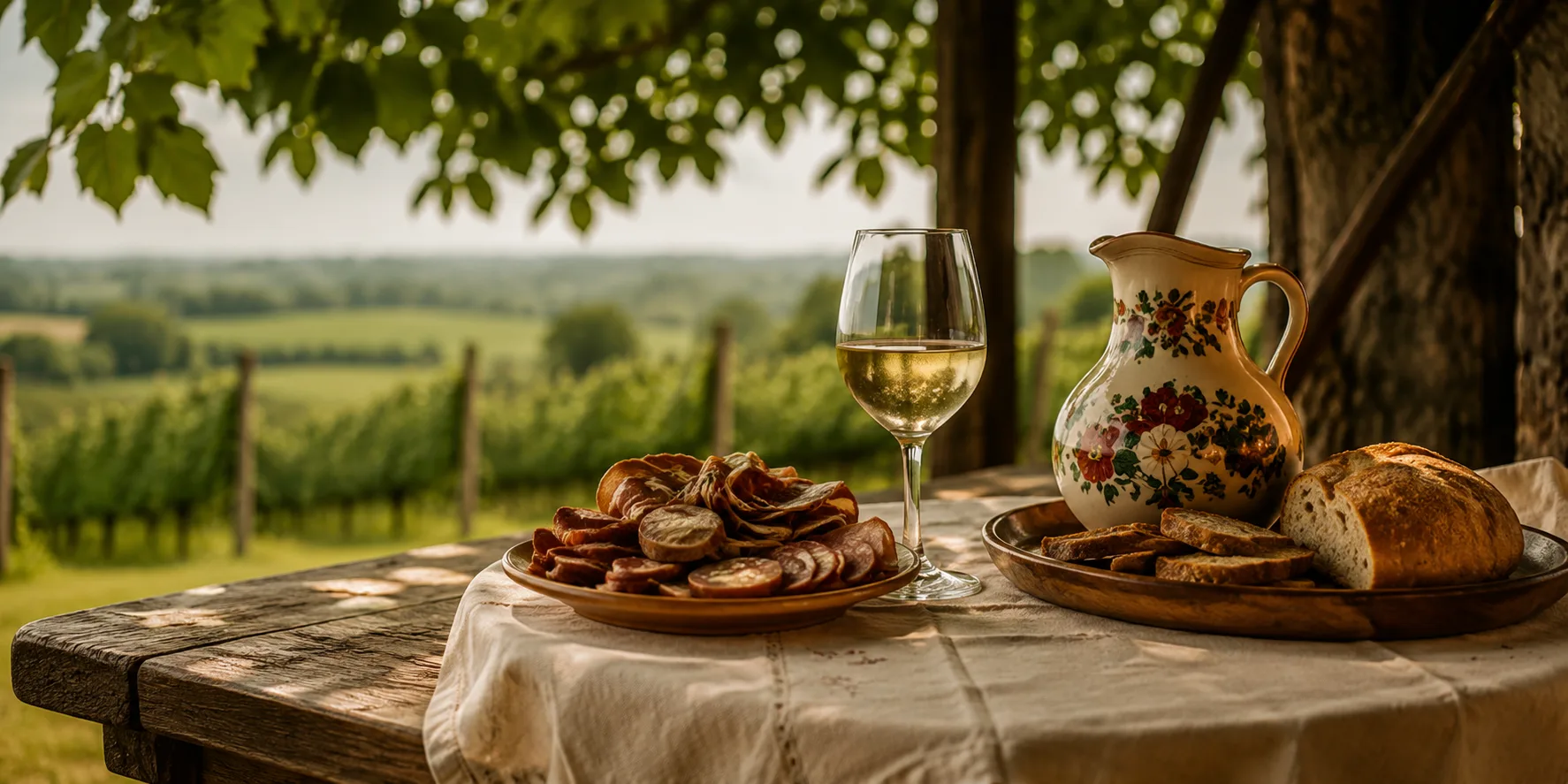
For the contemporary traveler, navigating the wine roads of Slavonia offers a profound departure from the commercialized, high-traffic tasting rooms of Western Europe. Here, the wine roads are tightly woven into the fabric of daily rural life. It is an immersive journey through a living agricultural heritage where family traditions span generations, and where a crisp glass of Graševina is offered not just as a product, but as an extension of deep-seated regional hospitality.
The Historic Cradle: The Terroir of Kutjevo
Any serious exploration of the Slavonian wine landscape must begin in Kutjevo, an unassuming town that holds an unrivaled position in regional winemaking history. The story of Kutjevo wine is inextricably linked with the Cistercian monks who established a monastery here in the year 1232. These monks, renowned across medieval Europe for their agricultural sophistication, mapped out the local hillsides with a keen eye for microclimates, soil drainage, and solar exposure. They dug deep subterranean vaults that remain operational to this day, providing a continuous cool environment that has preserved the region’s viticultural secrets for nearly eight centuries.
The secret to Kutjevo’s enduring success lies directly beneath the topsoil. Nestled on the southern slopes of the Papuk and Krndija mountains, the vineyards benefit from a geological tapestry composed of volcanic rocks, mineral-rich loess, and weathered clay. This unique composition provides excellent drainage while imbuing the grapes with a distinct, sophisticated minerality. The mountains act as a natural barrier, protecting the vines from the harsh northern winds while allowing warm, sun-drenched air currents from the Pannonian basin to circulate through the rows. This specific climate dynamic ensures a long, steady ripening season that preserves the natural acidity of the grapes while maximizing their aromatic complexity.
Graševina: The Sovereign Varietal
While regional winemakers have successfully cultivated excellent iterations of Chardonnay, Pinot Gris, and bold reds like Frankovka, the undisputed sovereign of Slavonia is Graševina. Though known elsewhere in Central Europe as Welschriesling, it is here in the soils of Slavonia that the varietal reaches its highest expression, shedding its reputation as a simple table wine to become a complex, highly nuanced masterpiece.
In a typical Slavonian cellar, a single winemaker will often present multiple interpretations of Graševina from the same harvest season. The journey begins with the young, fresh expressions: crisp, pale straw-colored wines characterized by vibrant aromas of green apple, fresh-cut grass, and a bright citrus finish. These are the daily wines of the region, designed to accompany light meals and warm afternoons.
[Graševina Structural Evolution]
+----------------------+-----------------------+-----------------------+
| Style Profile        | Aging Container       | Dominant Tasting Notes|
+----------------------+-----------------------+-----------------------+
| Young / Fresh        | Stainless Steel Vats  | Green Apple, Citrus   |
| Aged / Reserve       | Slavonian Oak Casks   | Ripe Pear, Chamomile  |
| Late Harvest / Ice   | Small Wooden Barrels  | Dried Apricot, Honey  |
+----------------------+-----------------------+-----------------------+
However, as you move deeper into the premium selections, the true versatile nature of the grape reveals itself. Aged Graševinas, often matured in large oak casks, develop a deep golden hue and reveal rich layers of ripe pear, honey, chamomile, and a signature, slightly bitter almond finish that cleanses the palate. For the grand finale, winemakers showcase their late-harvest and ice wines—syrupy, complex elixirs where the sugars and acids have concentrated to produce intense notes of dried apricots, figs, and exotic spices. To taste through these variations is to understand that Graševina is not just a grape, but a canvas upon which the climate and the winemaker’s touch are clearly painted.
Oak and Architecture: Shaping the Narrative
The identity of Slavonian wine is shaped not only by what grows in the ground, but also by what grows out of it. The region is home to the vast Spačva forest, source of the world-renowned Slavonian oak (Quercus robur). This tight-grained wood is highly coveted by premium winemakers across Europe, including the prestigious estates of Piedmont and Tuscany, due to its ability to impart subtle, well-integrated tannins and soft vanilla notes without overpowering the natural fruit characteristics of the wine.
In Slavonia, this resource is utilized to its fullest potential. Walking through a traditional cellar, you are flanked by massive, hand-carved oak casks, some large enough to hold thousands of liters. These imposing vessels allow for a slow, micro-oxygenation process that stabilizes the wine and softens its structure over years of quiet maturation.
Concurrently, a new architectural movement is taking root along the wine roads. While the historical cellars remain the spiritual heart of the region, a younger generation of winemakers is commissioning striking, modern tasting facilities that blend seamlessly into the topography. These contemporary structures utilize clean lines, local stone, and glass walls that frame the rolling vineyards, creating a physical bridge between ancient cellars and a forward-looking aesthetic.
Navigating the Trail: A Roadmap for Travelers
Embarking on a journey through these wine roads requires an appreciation for slow travel. The routes are best explored by car or bicycle, winding through immaculate villages where every third house seems to feature a small sign indicating a private tasting room.
An ideal itinerary starts in the hills of Kutjevo, moves eastward toward the sweeping slopes of Brodski Stupnik, and concludes in the undulating landscape surrounding Đakovo. Planning ahead is highly recommended, not because the wineries are exclusive, but because they are often run entirely by the family members themselves. A phone call or email a day in advance ensures that the owner will be there to turn the heavy key in the cellar door, pour the wine directly from the cask, and share the specific stories behind each vintage.
Conclusion
As the sun begins its slow descent over the golden hillsides, casting long, geometric shadows across the rows of vines, the true magic of the Slavonian wine roads becomes clear. This is not a commercialized attraction designed for rapid turnover; it is a region that demands your time and rewards your curiosity. In every glass of wine poured, in every ancient oak barrel lining the damp cellar walls, and in every conversation with a passionate winemaker, you are experiencing an authentic, unbroken chain of human heritage that elevates the simple act of drinking wine into an unforgettable cultural encounter.